Five devices, one tracking core
Whatever you buy from ORBITAL, it speaks the same spatial language: the same 200 Hz SLAM engine, the same hand and eye tracking, the same software platform. Mix headsets, glasses, controllers and hubs in one room without adapters or dongles.
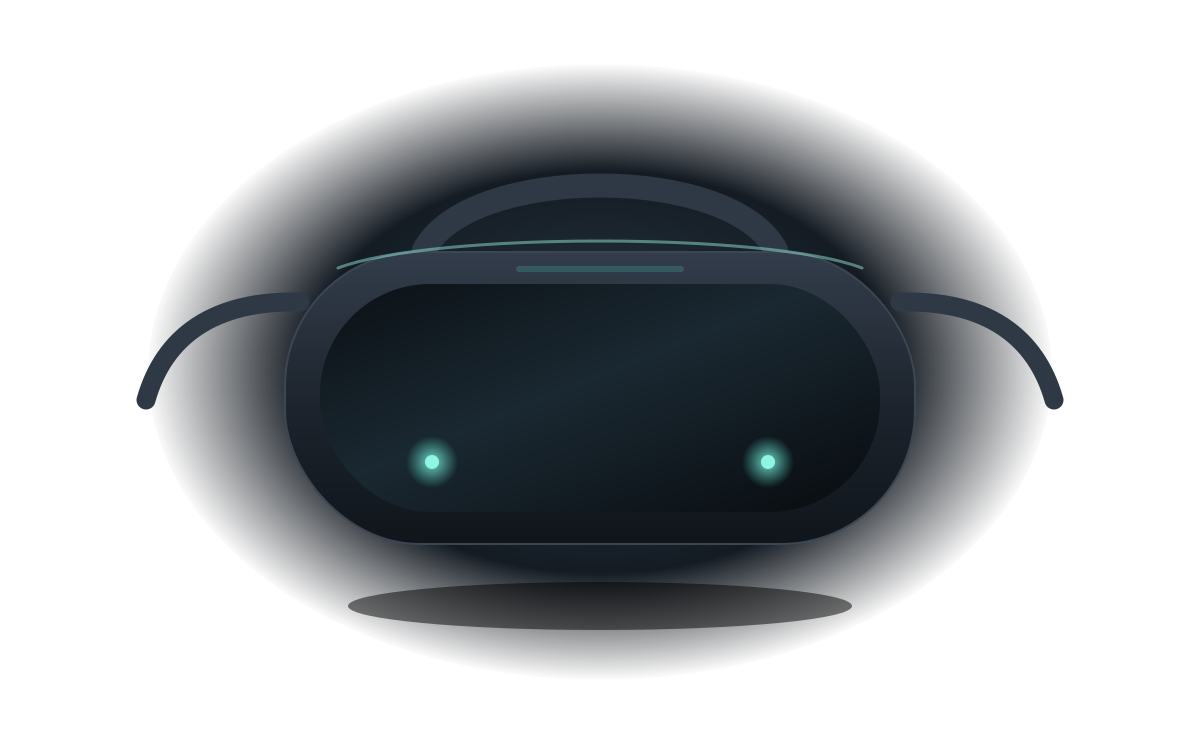
Vision X1
Our reference headset. Folded pancake optics keep the optical path short so the weight sits close to your face, while two micro-OLED panels deliver 3840 × 3552 per eye — enough resolution for 10-point CAD annotation and long-form reading.
- Dual micro-OLED, 3840 × 3552 per eye, 90–120 Hz, 1,100 nits peak
- 96° horizontal field of view with per-eye distortion mapping
- Six-camera inside-out tracking, no base stations required
- Eye, hand (26 joints) and face tracking running fully on-device
- 428 g body, swappable battery pack, 6 hours of mixed-reality use
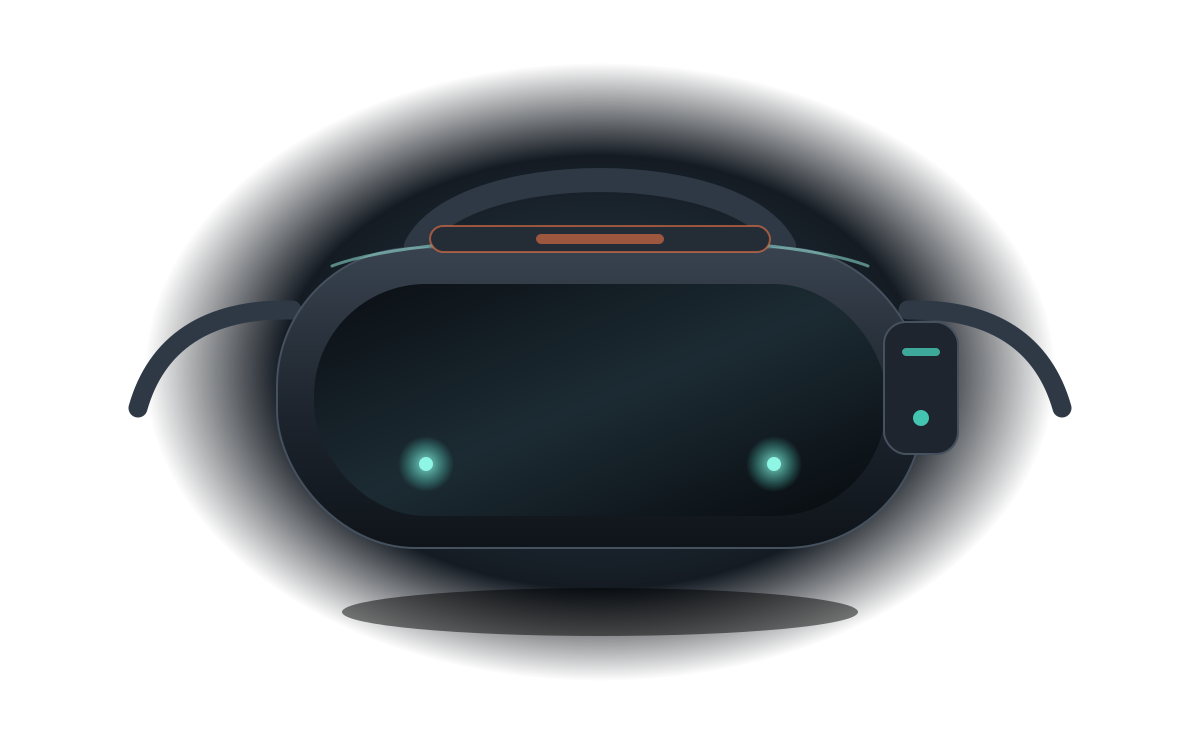
Vision X1 Pro
Everything in the Vision X1, plus the things a fleet deployment actually needs: a dToF depth sensor for metric room capture, hot-swap power so a session never dies mid-procedure, and a wired DisplayPort mode that bypasses compression entirely.
- dToF depth sensor for room-scale mesh capture and occlusion
- Hot-swap dual battery with 45 seconds of ride-through
- Wired USB-C DisplayPort alt-mode for zero-latency tethered sessions
- Motorised IPD adjustment and three facial interface sizes
- Fleet management console, kiosk mode and signed firmware policy
Aero
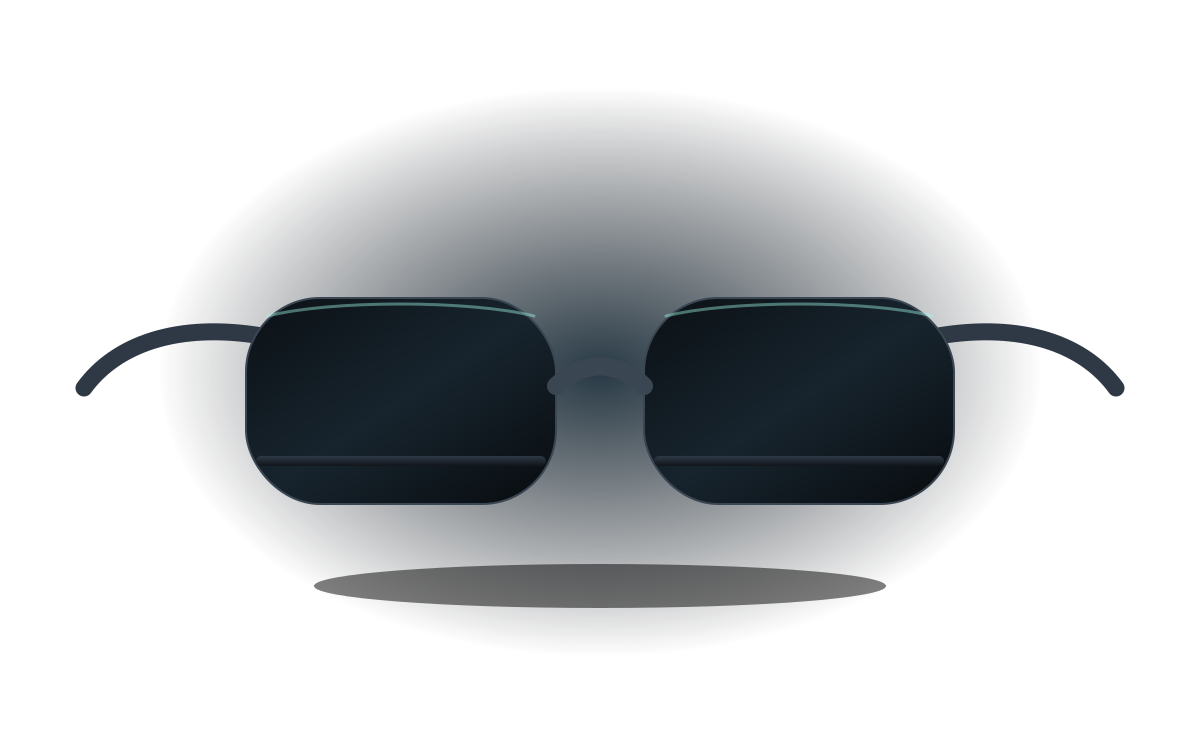
Aero is for the hours you are not in a headset. At 78 g it disappears on your face, projecting a 1080p image per eye over whatever you are looking at — service manuals, wiring diagrams, patient notes, pick lists.
- 78 g titanium-frame glasses with waveguide combiner
- 1920 × 1080 per eye, 46° field of view, 1,500 nits perceived brightness
- Powered by USB-C from a phone, laptop or the Nexus C1 hub
- Three-degrees-of-freedom with optional six-degrees-of-freedom add-on
- Prescription insert compatible, tinted and clear shields included
Glide
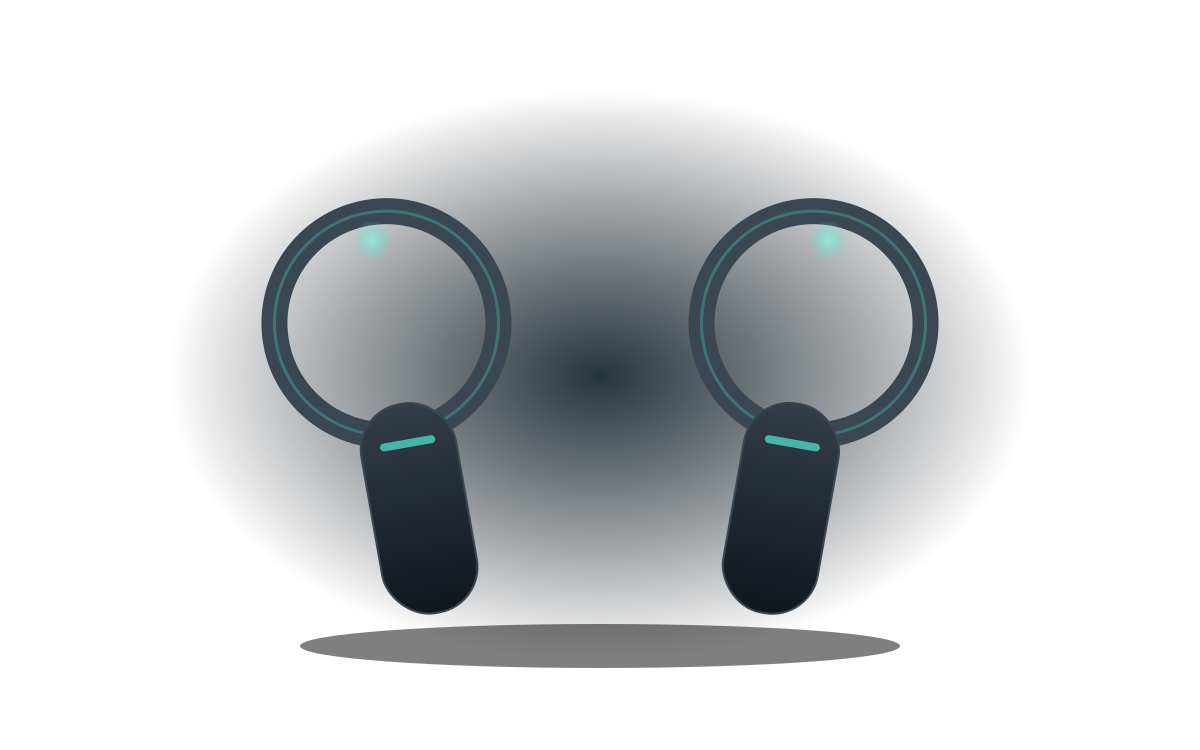
Glide exists because hand tracking alone cannot tell you that a virtual latch just clicked. Two wideband voice-coil actuators per controller reproduce everything from a 20 Hz rumble to a 1,000 Hz edge, with 6 ms from render to your fingers.
- Six-degrees-of-freedom tracking rings, sub-millimetre positional accuracy
- Wideband voice-coil haptics, 20 Hz – 1,000 Hz, 6 ms latency
- Analogue trigger and grip with capacitive thumb rest
- Eight-hour battery, USB-C fast charge in 45 minutes
- Pairs with Vision X1, X1 Pro and Aero
Nexus C1
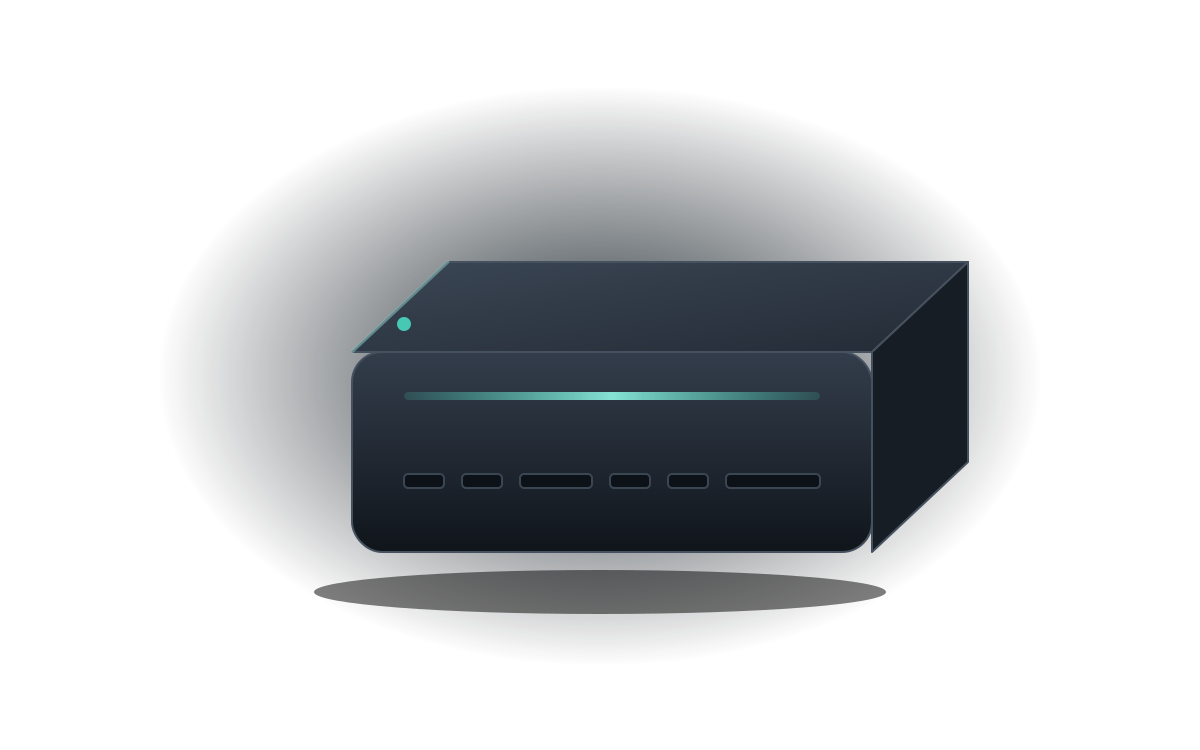
The Nexus C1 turns a headset into a shared resource. One hub drives four Vision headsets over Wi-Fi 7 or 2.5 GbE, so a training room, a showroom or a classroom needs one machine instead of four — and one place to update content.
- Sixteen-core XR system-on-chip with 32 GB unified memory
- 1 TB NVMe storage, expandable to 4 TB
- Streams up to four headsets at 4K per eye over Wi-Fi 7
- 2.5 GbE, two USB-C DisplayPort outputs, hardware encode block
- Rack-mount bracket and 19-inch shelf kit available
Full line-up comparison
Indicative specifications for the current production revision. Regional variants and OEM configurations differ — request the datasheet for the exact part number you intend to order.
| Specification | Vision X1 | Vision X1 Pro | Aero | Glide | Nexus C1 |
|---|---|---|---|---|---|
| Category | Mixed-reality headset | Enterprise headset | XR glasses | Haptic controllers | Spatial compute hub |
| Display | Dual micro-OLED, pancake optics | Dual micro-OLED, pancake optics | Waveguide combiner, LED projection | — | — |
| Resolution per eye | 3840 × 3552 | 3840 × 3552 | 1920 × 1080 | — | Up to 4K streaming per headset |
| Field of view | 96° horizontal | 96° horizontal | 46° diagonal | — | — |
| Refresh rate | 90 Hz / 120 Hz | 90 Hz / 120 Hz | 60 Hz | 1,000 Hz sampling | — |
| Tracking | 6DoF inside-out, eye, hand, face | 6DoF inside-out, eye, hand, face, depth | 3DoF, optional 6DoF module | 6DoF, analogue trigger and grip | — |
| Processor | XR2-class SoC, 16 GB memory | XR2-class SoC, 16 GB memory | Host-powered, no local SoC | Dedicated haptic DSP | 16-core XR SoC, 32 GB memory |
| Storage | 512 GB | 512 GB | — | — | 1 TB NVMe, up to 4 TB |
| Connectivity | Wi-Fi 7, Bluetooth 5.3, USB-C | Wi-Fi 7, Bluetooth 5.3, USB-C DP alt-mode | USB-C tethered | Wireless to host | Wi-Fi 7, 2.5 GbE, 2 × USB-C DP |
| Battery | 6 h, swappable pack | 6 h, hot-swap dual pack | Host-powered | 8 h, USB-C fast charge | Mains powered |
| Weight | 428 g | 462 g | 78 g | 132 g each | 1.9 kg |
| Compliance | CE, FCC, UKCA, IEC 62471 | CE, FCC, UKCA, IEC 62471, IEC 60601-1-2 ready | CE, FCC, UKCA, IEC 62471 | CE, FCC, UKCA | CE, FCC, UKCA, IEC 62368-1 |
| Warranty | 2 years | 3 years, advance replacement | 2 years | 1 year | 3 years |
| Price from | USD 2,490 | USD 3,290 | USD 1,190 | USD 349 / pair | USD 1,890 |
What comes with every order
Evaluation units
Thirty-day evaluation units for qualified organisations, with return shipping covered if the device does not fit your workflow.
Developer kits
Unity and Unreal packages, OpenXR 1.1 conformance notes and a hardware-in-the-loop test rig for teams building their own content.
Fleet services
Volume pricing, custom engraving, pre-imaged devices, spare-part kits and a named support engineer for orders above 25 units.
Get the datasheet for your part number
Tell us the model, quantity and destination market. We will send the current datasheet, lead time and landed price.